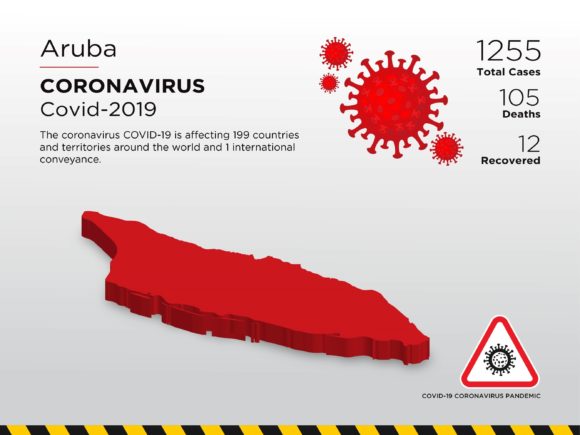
Aruba Affected Country 3D Map: A Clear Visual Tool for Global Health Communication
When it comes to understanding the global impact of health crises like the COVID-19 pandemic, visual tools are essential. The Aruba Affected Country 3D Map offers a compelling way to represent data across regions, helping creators, educators, and businesses communicate complex information in a simple, engaging format. Whether you're designing a social media post, an infographic, or a public awareness banner, this design template provides a visually rich and adaptable base for your message.
Why People Are Interested in the Aruba Affected Country 3D Map
The popularity of the Aruba Affected Country 3D Map stems from its versatility and visual appeal. It allows users to overlay data such as total cases, deaths, and recoveries onto a realistic, three-dimensional representation of the globe, with Aruba and other countries clearly highlighted. This makes it ideal for:
- Social media updates on pandemic trends
- Infographics for public health campaigns
- Educational materials for schools and universities
- Marketing and awareness banners for businesses and organizations
Its included file formats—EPS and JPEG—make it suitable for both high-resolution print and digital use, which is a major advantage for professionals across industries.
Common Mistakes When Using the Aruba Affected Country 3D Map
While this template is powerful, it’s easy to misuse it in ways that reduce its effectiveness or clarity. Here are some common issues users encounter:
1. Overloading the Map with Too Much Data
One of the most frequent mistakes is trying to display too many data points on the map at once. Including total cases, deaths, recoveries, vaccination rates, and more can clutter the visual and confuse your audience.
Result: Poor readability and loss of key messaging.
Better approach: Focus on one or two key metrics per graphic. If you need to show more data, create a series of visuals or use accompanying charts and tables.
2. Ignoring File Resolution and Format Requirements
Although the template includes both EPS and JPEG files, not all users are aware of when to use each. Using a low-resolution JPEG for print or a vector EPS for a quick social media post can lead to poor quality or unnecessary complexity.
Result: Blurry images, long load times, or formatting issues.
Better approach: Use JPEG for web and social media where fast loading is important. Use EPS for print materials or when you need to edit individual map elements in vector software like Adobe Illustrator.
3. Misrepresenting Data Through Poor Color Choices
Color plays a critical role in data visualization. Choosing colors that are too similar, too bright, or that don’t follow standard conventions (like red for danger or green for recovery) can mislead viewers.
Result: Confusion or misinterpretation of data severity.
Better approach: Stick to a consistent, intuitive color palette. Use tools like Adobe Color or Coolors to ensure contrast and clarity. Always test your visuals with others to confirm the message is clear.
4. Not Tailoring the Design to the Audience
Using the same template for different audiences without adjusting the language, style, or data emphasis can reduce its impact. For example, a banner for a government health department should look different from a social media post for a fitness blog.
Result: Low engagement or mismatched tone.
Better approach: Customize the template to suit your brand or audience. Adjust fonts, colors, and layout to align with your communication style. Add relevant icons or graphics to enhance context.
What to Check Before Downloading or Using the Aruba Affected Country 3D Map
Before you use this design template, take a few moments to ensure it meets your specific needs:
- Compatibility: Confirm the file types (EPS and JPEG) work with your software and intended output (web, print, video).
- Customizability: Make sure the layers are editable if you plan to add or change data points or labels.
- Accuracy: Verify that the 3D map includes the most recent geographic boundaries and country names, especially for Aruba and surrounding regions.
- License: Double-check usage rights—some templates may restrict commercial use or require attribution.
How to Maximize the Value of the Aruba Affected Country 3D Map
To get the most out of this visual tool, consider the following tips:
- Use it for storytelling: Don’t just show data—use the map to tell a story about trends, comparisons, or progress over time.
- Pair with other templates: Combine the 3D map with related designs like quarantine banners or pandemic posters to create a cohesive campaign.
- Keep it updated: If you're using the map for ongoing reporting, update it regularly to maintain relevance and trust.
- Test your visuals: Share drafts with colleagues or a small audience to get feedback before publishing.
Final Thoughts
The Aruba Affected Country 3D Map is more than just a design asset—it’s a powerful communication tool that can help you convey important global health information clearly and effectively. By avoiding common mistakes and tailoring the template to your specific needs, you can create visuals that inform, engage, and resonate with your audience.
Thank you for seeing my product. I hope you’ve liked it and that this template proves useful for your next project. If you find it valuable, please recommend it to others. Your support means a lot!