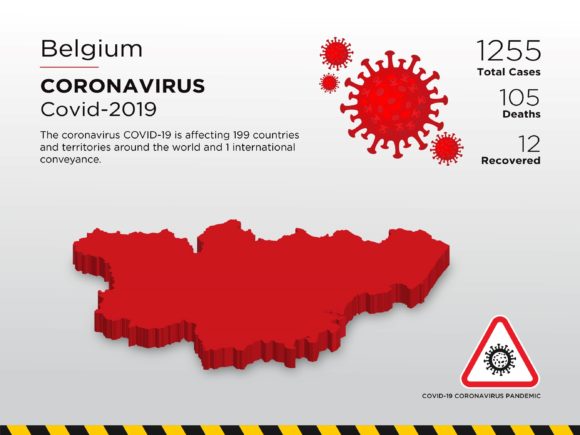
Belgium Affected Country 3D Map Corona: A Visual Tool for Understanding the Pandemic Landscape
Understanding the Role of 3D Mapping in Pandemic Visualization
As the world grappled with the unprecedented challenges of the Coronavirus pandemic, the need for clear, accurate, and visually compelling data representation became more important than ever. One of the most effective tools to emerge from this period was the Belgium Affected Country 3D Map Corona. This innovative infographic design allows users to visualize the spread, impact, and recovery rates of the virus in a way that traditional charts and tables simply cannot match.
3D mapping offers a spatial dimension that enhances comprehension, especially when tracking global health crises. By transforming raw numbers into a dynamic, color-coded topography, these maps make it easier for audiences to grasp the severity of outbreaks in specific regions, including Belgium, which experienced significant fluctuations in infection rates throughout the pandemic.
Key Features of the Affected Country 3D Map of Coronavirus Infographics Design Template
The Affected Country 3D Map of Coronavirus Infographics Design Template is a versatile and powerful visual asset that supports a wide range of applications. Whether used for educational materials, public health announcements, or social media updates, this template provides a scalable and customizable solution for presenting complex data in an accessible format.
- Dynamic Data Representation: The 3D elevation corresponds to the number of cases, making it easy to identify hotspots at a glance.
- Customizable Color Schemes: Users can adjust colors to reflect different metrics such as total cases, deaths, or recoveries.
- Multi-format Support: Available in both EPS and JPEG formats, ensuring compatibility across design platforms and publishing channels.
- Responsive Design: Optimized for use in banners, posters, presentations, and digital dashboards.
Why Belgium Was a Critical Case Study in Pandemic Mapping
Belgium, with its dense population and central location in Europe, became a focal point for tracking the virus's spread. The Belgium Affected Country 3D Map Corona was instrumental in communicating the country’s evolving situation to both domestic and international audiences. Public health officials and media outlets used similar visualizations to convey the urgency of lockdowns, vaccination drives, and quarantine measures.
By overlaying demographic, geographic, and medical data, these maps provided a comprehensive view of how factors like urban density, mobility patterns, and healthcare infrastructure influenced the pandemic’s trajectory. This made them invaluable for policy planning and public communication alike.
Use Cases Across Industries and Audiences
The Coronavirus Post Infographics Design Template has found utility far beyond the realm of epidemiology. Its adaptability makes it a go-to resource for professionals across sectors:
- Public Health Agencies: Used to create awareness campaigns and inform citizens about local infection rates.
- Educators: Integrated into lessons on geography, public health, and data literacy to teach students how to interpret complex datasets.
- Media Outlets: Leveraged for real-time reporting and social media updates during peak pandemic periods.
- Business Analysts: Applied to assess the economic impact of regional outbreaks and inform risk management strategies.
- Graphic Designers: Utilized as a foundational element in creating banners, posters, and infographics for online and print media.
Designing Social Media Banners with Total Cases, Deaths, and Recoveries
One of the most popular applications of the Affected Country 3D Map of Coronavirus Infographics Design Template has been in the creation of social media banners. These visuals are designed to capture attention quickly, provide essential information, and encourage engagement.
A well-crafted banner might include:
- A 3D map of Belgium with elevated peaks indicating case density < sidebar-style section listing real-time data: total cases, deaths, recovered individuals
- A call-to-action such as “Stay Home,” “Wear a Mask,” or “Get Vaccinated”
Such banners are not only informative but also serve as emotional touchpoints, reminding viewers of the ongoing impact of the pandemic and the importance of community responsibility.
Global Pandemic Vector Flat Illustration: A Complementary Design Element
While 3D maps offer depth and realism, flat illustrations provide a minimalist, modern aesthetic that appeals to a broad audience. The Global Pandemic Vector Flat Illustration is often used alongside 3D maps to create contrast and visual interest. These illustrations can depict scenes such as:
- People wearing masks and maintaining social distance
- Vaccination centers and healthcare workers
- Home offices and remote learning environments
- Icons representing hygiene practices like handwashing and sanitizing
When combined with the Belgium Affected Country 3D Map Corona, these illustrations offer a balanced visual narrative that is both data-driven and emotionally resonant.
Quarantine and Stay-at-Home Messaging Through Banner Design
During the height of the pandemic, banners became a primary medium for conveying public health directives. The Quarantine, stay at home, coronavirus Covid-19 banner design concept was widely adopted by governments, organizations, and individuals to promote safety and compliance.
Effective quarantine banners typically feature:
- A clear and concise message (e.g., “Stay Safe, Stay Home”)
- Supporting visuals like icons of people at home, face masks, or hand sanitizers
- A 3D map or infographic to contextualize the local situation
- A color palette that evokes calmness and trust (blues, greens, soft grays)
These banners were especially effective on social media platforms, where they could be shared rapidly and widely to reinforce public health messaging.
Creating a Pandemic Poster That Resonates
Posters have long been a tool for public communication, and during the Covid-19 outbreak, they took on renewed significance. The pandemic poster design needed to be both informative and impactful, often combining statistics with emotional appeals.
Designers often used the following elements to maximize engagement:
- Contrasting colors to draw attention
- Large, readable fonts for key messages
- Icons and illustrations that transcend language barriers
- Maps and charts to provide geographic context
The Belgium Affected Country 3D Map Corona was frequently used in such posters to highlight the localized impact of the virus, making the threat feel more immediate and personal to viewers.
Choosing the Right File Formats: EPS vs JPEG
When working with the Affected Country 3D Map of Coronavirus Infographics Design Template, understanding the included file formats is crucial for achieving the best results. The package includes both EPS and JPEG files, each serving a unique purpose.
- EPS (Encapsulated PostScript): Ideal for vector-based editing and scaling without loss of quality. Best suited for print media and professional design work.
- JPEG (Joint Photographic Experts Group): A raster format perfect for digital use, especially on websites and social media where fast loading is essential.
Designers should choose the format that best aligns with their intended use case. For example, EPS files are preferable for high-resolution posters, while JPEGs are more practical for quick online sharing.
Conclusion: Thank You for Engaging with This Design
Thank you for seeing my product. I hope you’ve liked it and that this Coronavirus Post Infographics Design Template proves to be a valuable resource for your work. Whether you're a public health communicator, a designer, or an educator, these tools offer a powerful way to present critical pandemic data with clarity and impact.
If you find this design useful, please recommend it to others. Your support means a lot and helps ensure that these tools continue to reach those who need them most. Together, we can make complex data more accessible, engaging, and meaningful for everyone.